
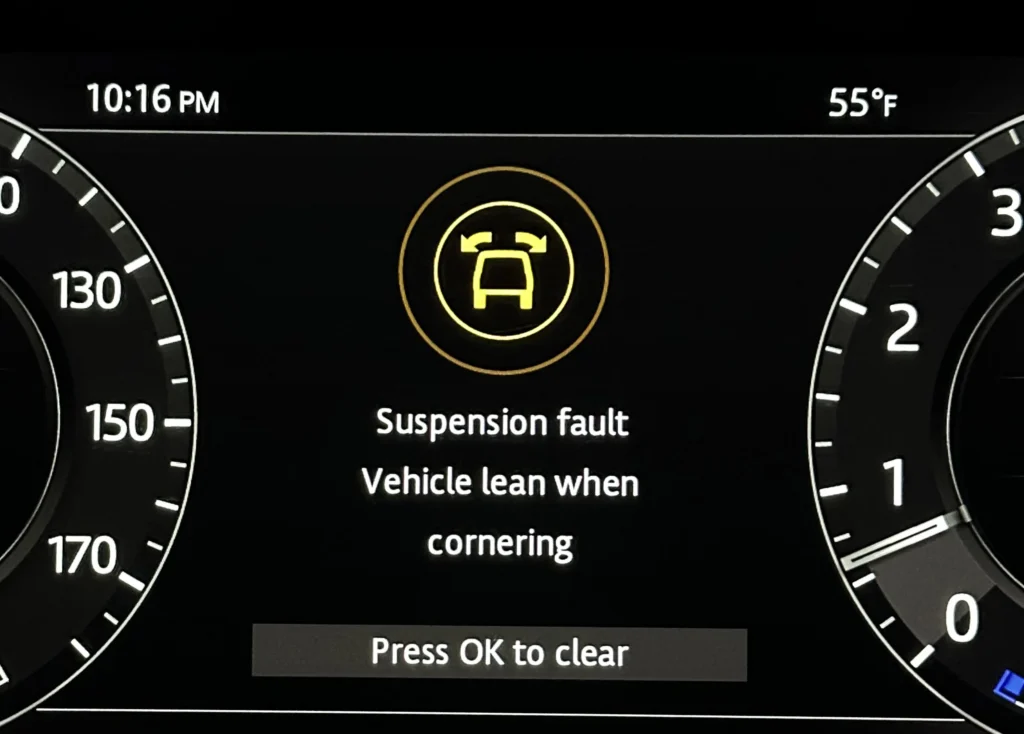
In the late 1990’s with the Discovery 2, Land Rover introduced a system called ACE, Active Cornering Enhancement. The system included active sway bars to improve the stability of the truck while cornering, especially at higher speeds. In 2006 with their Range Rover Sport Supercharged model they updated the system to include an active sway bar front and rear that was fed by a pump on the engine and high pressure lines feeding along the passenger side underneath the vehicle, these lines were exposed and had no coverings, Land Rover kept with this same set up through to the end of their early Sport body style which ended in 2013. With the Calgary elements these lines held up relatively well except for one flaw that was experienced over a long period of time where, behind the passenger wheel well and tucked beside the frame, the lines would rupture and cause a leak, leading to the lines requiring replacement, sometimes with the valve block as well.
We then move on to our Full Size Range Rovers from 2013 onward (L405) and our Range Rover Sports from 2014 onward (L494) equipped with the 5.0L super charged (although supercharged the 3.0L v6 models do not have ACE). With these trucks they re-positioned the lines to underneath the driver side and protected them with a plastic shield. This shield protects the lines from salt, gravel, mud, and relatively all the elements however, with both sides and the back being covered, the front of the cover located just behind the drivers front tire has an opening.
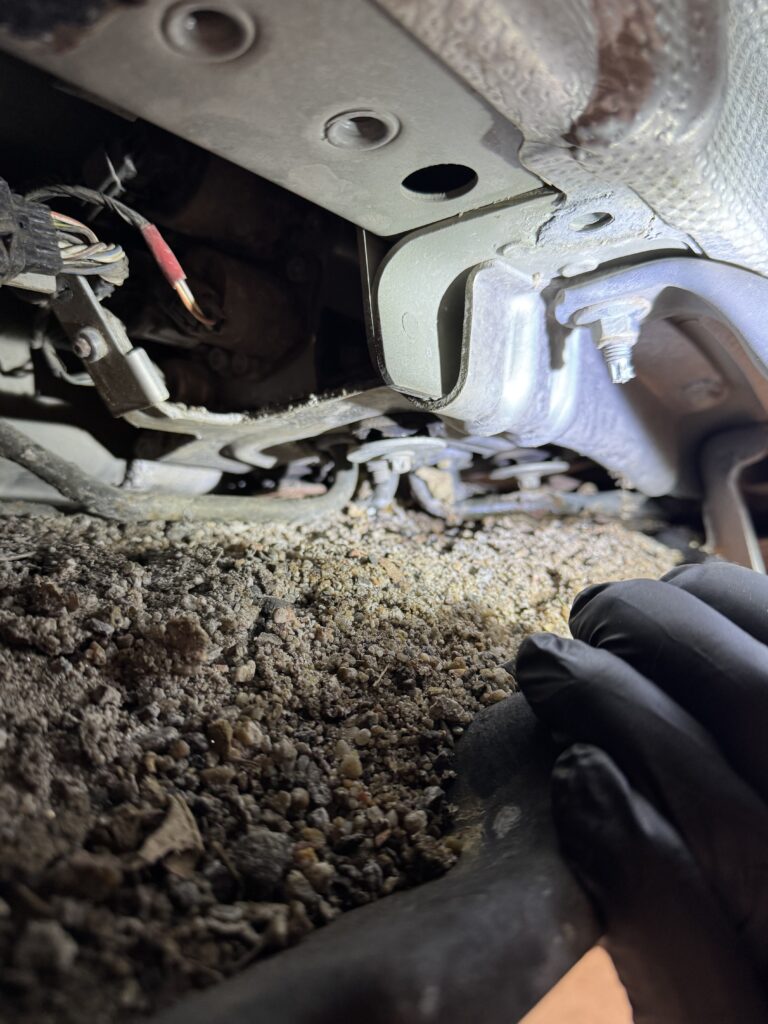
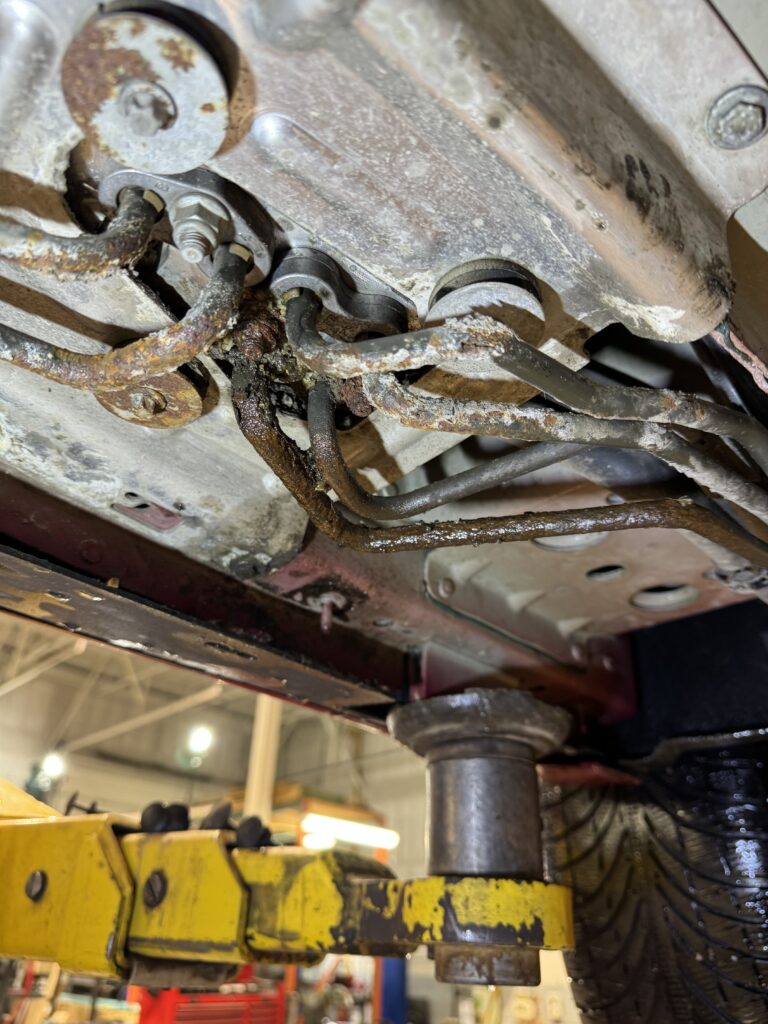
As we can see from the above photos the repercussions of this opening are great, it often leads to an excessive build up of debris within the plastic shield that starts to corrode the lines. The surface rust that develops worsens to a leak within the body of the line, in our climate even with the front section being blocked, due to the salt and moisture in the winter the lines would still be prone to rust out. Once a leak occurs and the system loses pressure you will experience a suspension fault on the dash, often a yellow or red light shown as a vehicle icon with arrows pointing to either side. This is an ACE fault.
One key factor to this repair is catching it early, if you are experiencing a suspension fault it is recommended to have it inspected as soon as possible, this is because if the lines leak enough fluid, and you continue to drive the vehicle, you risk damaging the ACE pump. The pump is attached to the engine, and being belt driven helps build pressure. When it experiences a lack of fluid the internal components grind and start to push metal through the lines, this means that in addition to the lines and valve block the pump will require replacement as well.
If it is during an oil change or an inspection on its own, getting your ACE lines inspected is a valuable asset to the longevity of your vehicle. TRS also offers corrosion preventative measures upon replacement of these parts to help ensure you should not have to do them again any time soon.
Contact us today to book your service or inspection. We look forward to seeing you soon!
Text: 587-899-9020 Email: service@trsauto.ca Phone: 403-769-1700 ext 1